
Is This You?
A smaller home is the right next step for more households than you'd think.
Downsizing isn't one situation. It's several different ones that happen to end the same way — with a move to something smaller, simpler, or closer to the people and places that matter to you.
The house is bigger than the household now. Rooms that once held a full family sit empty most of the year.
Stairs and a large lot have become work you'd rather not do. Mowing, gutters, and a second-floor laundry run stop feeling worth it.
You want to be closer to family, or near a village centre you can walk to instead of drive from.
A second property has quietly become the main one. It's time to make that official.
You're retiring and want lower fixed costs and less upkeep attached to where you live.
You simply want less house to manage — fewer rooms to heat, clean, and think about.
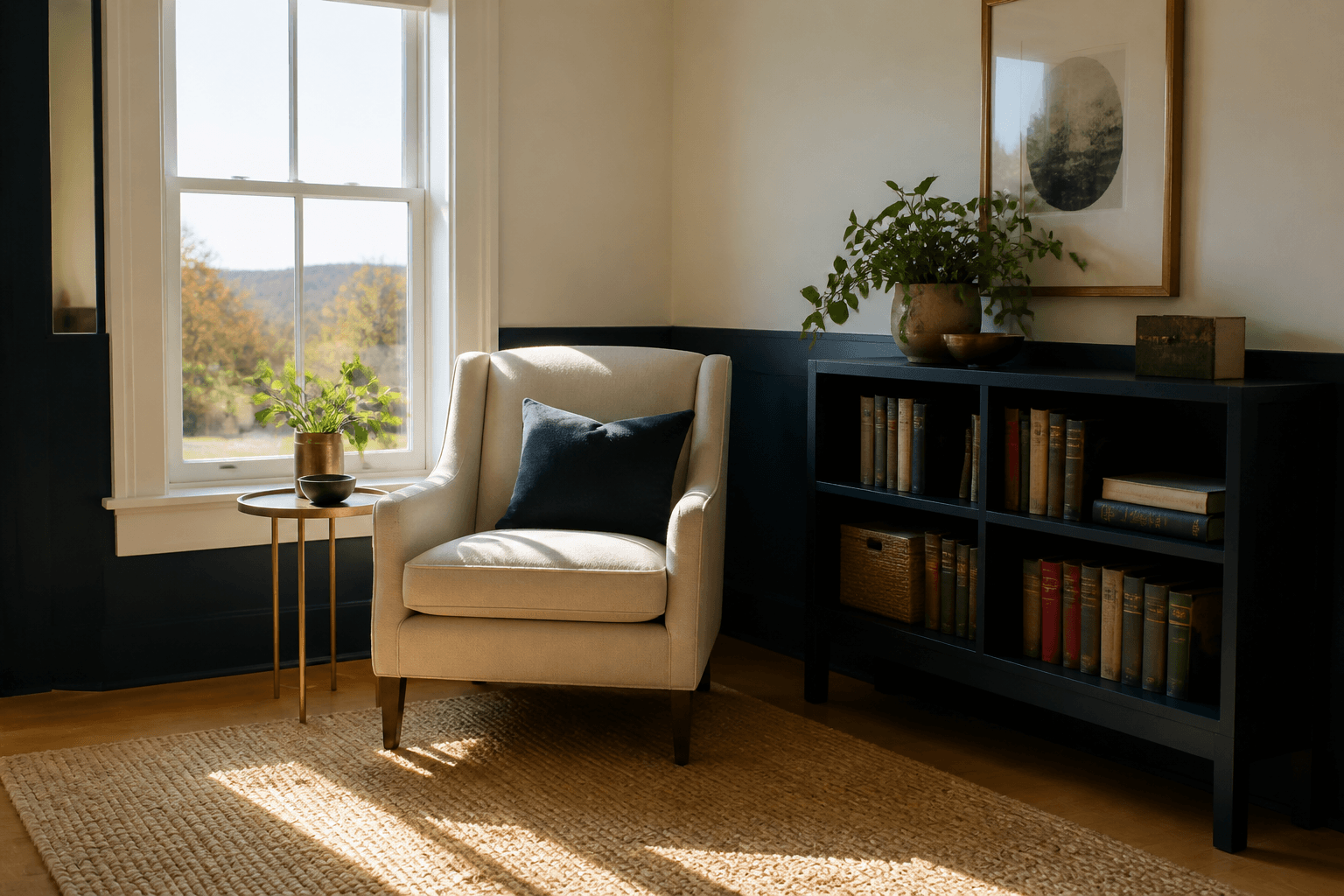
Here's the honest version: downsizing is mostly a sequencing and logistics problem, not an emotional one. Once you decide to make the move, most of the stress that follows comes from the order in which the two transactions happen — selling the current house and buying the next one — not from the decision itself.
The Real Question
It's not whether to downsize. It's what order the two transactions happen in.
Almost everything about how a downsizing move feels comes down to timing — whether you sell first, buy first, or line the two dates up on purpose. Here's how the three approaches compare.
Sell first, then buy
You close on your current home, know exactly what you have to work with, and then shop for the next place without pressure on the sale.
What makes this hard: you may need somewhere to live in between — temporary housing or a short stay with family while you find the right next home.
Buy first, then sell
You secure the next home, move once, and sell the current house at a more relaxed pace once you're already settled.
What makes this hard: you carry two properties at the same time for a period, which has its own set of obligations to manage.
Sell with a timed close
You negotiate a delayed closing or a rent-back on the sale so your move-out date lines up with your move-in date on the new home.
What makes this hard: it depends on finding a buyer and a seller on the other end who are both willing to agree to that timeline.
The financial side of each option — what you can qualify for, what it costs to carry two properties, how a delayed closing is structured — needs to be worked out with your lender. That's not something to guess at here. What Kevin can do is coordinate the dates on the real-estate side: timing the listing, the search, and the closings so they work together instead of against each other.
The best time to have this conversation is before the house goes on the market, not after. The sequence you choose shapes the search, the showings, and the offer strategy that follow — so it's worth deciding early, even if the actual move is still months away.
What To Look For
Not every smaller home is the right smaller home.
Some of the features that matter most in a downsize aren't about square footage at all — they're about how much the house asks of you day to day.
Single-level layouts exist locally, but they're concentrated in certain pockets rather than spread evenly — worth asking about specifically rather than assuming.
A primary bedroom on the main floor matters even in a two-story home, since it changes how livable the house is day to day.
Step-free entries at the front and back door make a real difference, especially if you're moving heavier items in and out often.
How much outdoor maintenance comes with the lot — a smaller house on a large, wooded lot can still mean a full weekend of yard work.
Condo and townhouse ownership shifts some maintenance to an HOA, but it's worth knowing exactly what the association covers and what's still on you.
Older village houses often have real charm, but also narrow staircases and a steep driveway — both worth weighing honestly.
Snow clearing and winter access — a shared driveway or a shared walkway changes who's responsible for keeping it clear.
Whether you can walk to anything — a market, a pharmacy, a coffee shop — changes how much daily life depends on a car.
Different towns, different character
The Hudson Valley doesn't have one version of "smaller home." A few examples of how the character changes from town to town:
Beacon and Cold Spring lean toward walkable village centres, with shops and the train within reach on foot.
New Paltz and Warwick mix a compact downtown with quieter rural lanes just outside it — more space, less foot traffic.
Next Step
A smaller home starts with a clear picture of where you stand today.
Whether you're a few months out or just starting to think it through, the next step is the same: get a clear picture of your current home's position and talk through the timing that makes sense for you.
(845) 250-3438 · kev.smith@exprealty.com
There's no obligation in a first conversation.